

For many homeowners, the idea of moving used to be the natural next step when a home no longer fit their needs. Today, that decision looks different.
Higher interest rates, limited housing inventory, and changing lifestyles have made moving more complex and, in many cases, less appealing. Instead, more homeowners in Central Pennsylvania are choosing to stay where they are and invest in improving the homes they already love.
A well-planned home addition offers a way to create more space, improve functionality, and adapt your home to how you live today, without the uncertainty of buying something new.
Over the past few years, many homeowners secured historically low mortgage rates, something that’s hard to walk away from. We often hear from clients who have explored moving, only to realize that even a similar home could come with a significantly higher monthly cost.
Instead of starting over financially, many are choosing to invest in the home they already have. A thoughtfully planned addition allows you to improve how your home lives and functions, without giving up the stability you’ve already built.
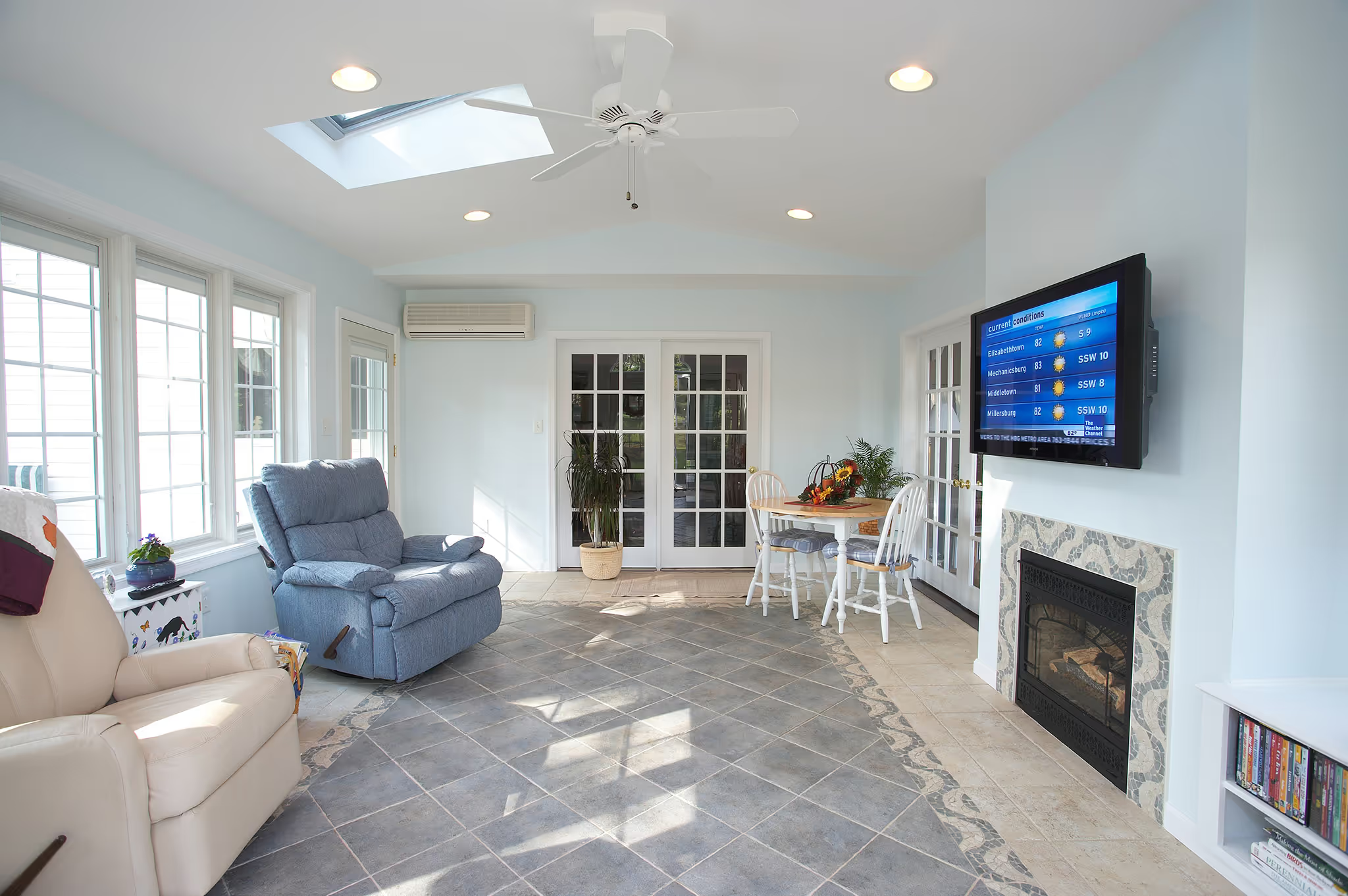

Finding the “right” home isn’t always as simple as it sounds. Even when something becomes available, it may not quite fit - whether it’s the layout, the condition, or the location.
We’ve worked with many homeowners who started their journey looking to move, but ultimately realized they didn’t want to compromise. An addition offers a different path, one where you can shape your home around your needs, instead of adjusting your life to fit a new space.
The way we live at home has changed, and we see that reflected in nearly every project. Kitchens are no longer just for cooking. Spare bedrooms have become offices. Living spaces are expected to do more, and do it better.
Many homes simply weren’t designed with these expectations in mind. Additions create the opportunity to rethink how your home supports your daily life - whether that means creating space to work, gather, or simply have room to breathe.
For many homeowners, the decision isn’t just financial, it’s personal. Your home is where life happens. It’s your routines, your neighborhood, your sense of comfort.
We often hear, “We love where we live, we just need more space.” An addition allows you to stay connected to what already feels right, while improving what no longer works.
Taken together, these aren’t just market trends - they’re real-life considerations. Home additions have become a thoughtful, practical way for homeowners to adapt their spaces without leaving behind what matters most.

Many kitchens we see were designed for a different time - often closed off, with limited storage or workspace. Today, homeowners want kitchens that feel open, connected, and easy to use.
Expanding the kitchen isn’t just about gaining space; it’s about improving how the entire home functions. It often becomes the place where everything comes together, from everyday routines to time spent with family and friends.
A primary suite addition is often about creating a sense of retreat within your own home. We work with homeowners who want a space that feels more comfortable, more private, and better suited to their needs over time.
These additions are designed with intention - balancing comfort, storage, and accessibility - so the space continues to serve you well into the future. Adding a primary suite on the main level of your home can greatly enhance your ability to "age-in-place," since mobility can become reduced as we age.
We’re seeing more families think ahead and plan for flexibility. Whether it’s caring for a parent, welcoming extended family, or simply preparing for the future, these spaces allow people to stay connected while maintaining independence.
A well-designed in-law suite provides privacy and comfort for everyone, while still feeling like a natural part of the home.

Homes are meant to bring people together, but not every layout makes that easy. A family room or great room addition creates a dedicated space to gather, whether that’s for quiet evenings, entertaining, or everyday life.
These spaces are often designed to feel open, comfortable, and connected, becoming the heart of the home.
For many homeowners, working from home is no longer temporary. What started as a makeshift setup has become a long-term need.
A dedicated home office allows for focus, separation, and a more productive environment. It’s not just about having a desk - it’s about creating a space that supports how you work each day.
This type of addition is a practical way to add both function and flexibility. Additional garage space helps with storage and organization, while the space above can be used in a variety of ways, from guest areas to offices or hobby rooms.
It’s an efficient way to expand your home while making the most of your property.
Today’s most popular additions aren’t just about adding square footage—they’re about creating spaces that truly support how you live. When a home is designed around your needs, it feels more comfortable, more functional, and more enjoyable every day.

A home addition is a significant project, and thoughtful planning is essential.
Approaching these factors early helps create a smoother, more predictable process.
Home additions involve many moving parts, from structural changes to mechanical systems and finishes. Decisions made early in the design phase directly impact cost, timeline, and overall success.
A design-build approach brings design and construction together from the beginning, allowing for better coordination and more informed decision-making. This helps reduce the likelihood of costly revisions and keeps the project aligned from start to finish.
Choosing between moving and remodeling is a personal decision. For some homeowners, relocating may still make sense. For others, expanding their current home offers more control, familiarity, and long-term value.
Consider:
For many, a home addition provides a way to improve both their home and their daily life without starting over somewhere new.
A well-designed home addition is more than extra space—it’s an opportunity to make your home work better for you, now and in the future.
With thoughtful planning, clear communication, and the right team, the process can feel organized and manageable from start to finish.
At Excel Remodeling, we help homeowners navigate each step—from initial ideas through design and construction—with a focus on quality, function, and long-term value.
If you’re considering a home addition and want to explore what’s possible, the next step is a conversation. Contact us or call (717) 774-4990 to begin.

Yes, most home additions require permits to ensure the work meets local building codes and safety standards. Requirements vary by municipality, and part of the planning process includes confirming what approvals are needed before construction begins.
Yes, a well-designed addition is planned to integrate with the existing home both structurally and visually. This includes matching rooflines, materials, and interior flow so the addition feels like a natural extension rather than a separate space.
Your home is tied to your daily life—your neighborhood, your routines, and your sense of comfort. For many homeowners, staying in a familiar environment is just as important as improving the space itself. An addition allows you to enhance your home without starting over somewhere new.
Taken together, these factors show that home additions are not just a trend—they are a thoughtful response to changing market conditions and evolving lifestyles.
The timeline for a home addition depends on the complexity of the project, but most additions involve several phases, including design, permitting, and construction. Planning and design can take several months, while construction timelines vary based on size and scope. A clear process helps keep the project organized and predictable.
The cost of a home addition in Central Pennsylvania varies based on size, layout, structural requirements, and finishes. Factors like foundation work, mechanical updates, and how the addition connects to the existing home all impact pricing. The most accurate way to determine cost is through a detailed design and planning process.
In today’s market, many homeowners find that building an addition can be more cost-effective than moving, especially when factoring in higher interest rates, closing costs, and limited housing inventory. An addition also allows you to stay in a location you already enjoy while customizing your home to fit your needs.
Some of the most common home additions today include kitchen expansions, primary suites, home offices, and multi-generational living spaces. These additions reflect how homeowners are using their homes differently, with a focus on comfort, flexibility, and long-term living.