
If you're considering a bathroom remodel in Central Pennsylvania, one of your first questions is likely: How much will it cost?
The honest answer is that bathroom remodel costs vary, sometimes significantly, depending on the size of the space, the scope of work, and the level of customization involved. This is true not only for bathrooms, but for kitchens as well. In fact, as we explain in our related article on Custom Kitchen Remodel Costs in Central Pennsylvania, the same principles apply: layout changes, material selections, and construction complexity all influence overall investment.
Understanding what drives those differences allows you to plan more confidently and align your budget with your priorities.
Bathroom remodel costs in Central Pennsylvania depend largely on scope and functionality.

A hall or guest bathroom is often smaller and may retain its original layout. When plumbing locations remain unchanged and the focus is on updating finishes, fixtures, flooring, and lighting, the project is typically more straightforward from a construction standpoint.
A primary bathroom, however, often involves a more comprehensive transformation. Homeowners may expand the shower, add a double vanity, incorporate custom cabinetry, install heated floors, or upgrade to higher-performance plumbing fixtures. Because primary bathrooms are used daily and often serve as a retreat space, they tend to involve more design planning, coordination, and detailed craftsmanship.
Still, square footage alone does not determine cost. Two bathrooms of similar size can vary widely in investment depending on the details behind the walls.
The largest cost differences often come down to construction complexity and material selection.
Relocating plumbing fixtures, such as moving a shower, toilet, or tub, requires reworking water supply and drain lines. In many Central Pennsylvania homes, particularly older properties, plumbing updates may also involve bringing systems up to current standards. Keeping plumbing in its original location generally reduces complexity.

Tile installation is another major factor. A simple layout using standard-sized tile requires significantly less labor than a design featuring large-format tile, intricate patterns, floor-to-ceiling applications, or custom niches. While these details can elevate the space visually, they also increase installation time and precision.
Waterproofing systems also play a critical role. Proper waterproofing protects framing, subfloors, and adjacent spaces from moisture damage. Though it isn’t visible when the project is complete, investing in high-quality waterproofing is essential for long-term durability.
Finally, fixtures and finishes can dramatically influence cost. Plumbing fixtures, custom cabinetry, lighting, and specialty glass enclosures vary widely in quality and performance. The difference between standard selections and higher-end options can significantly impact overall investment.
For some homeowners, bathroom remodeling is part of a larger question: Is it better to remodel, or should we move?
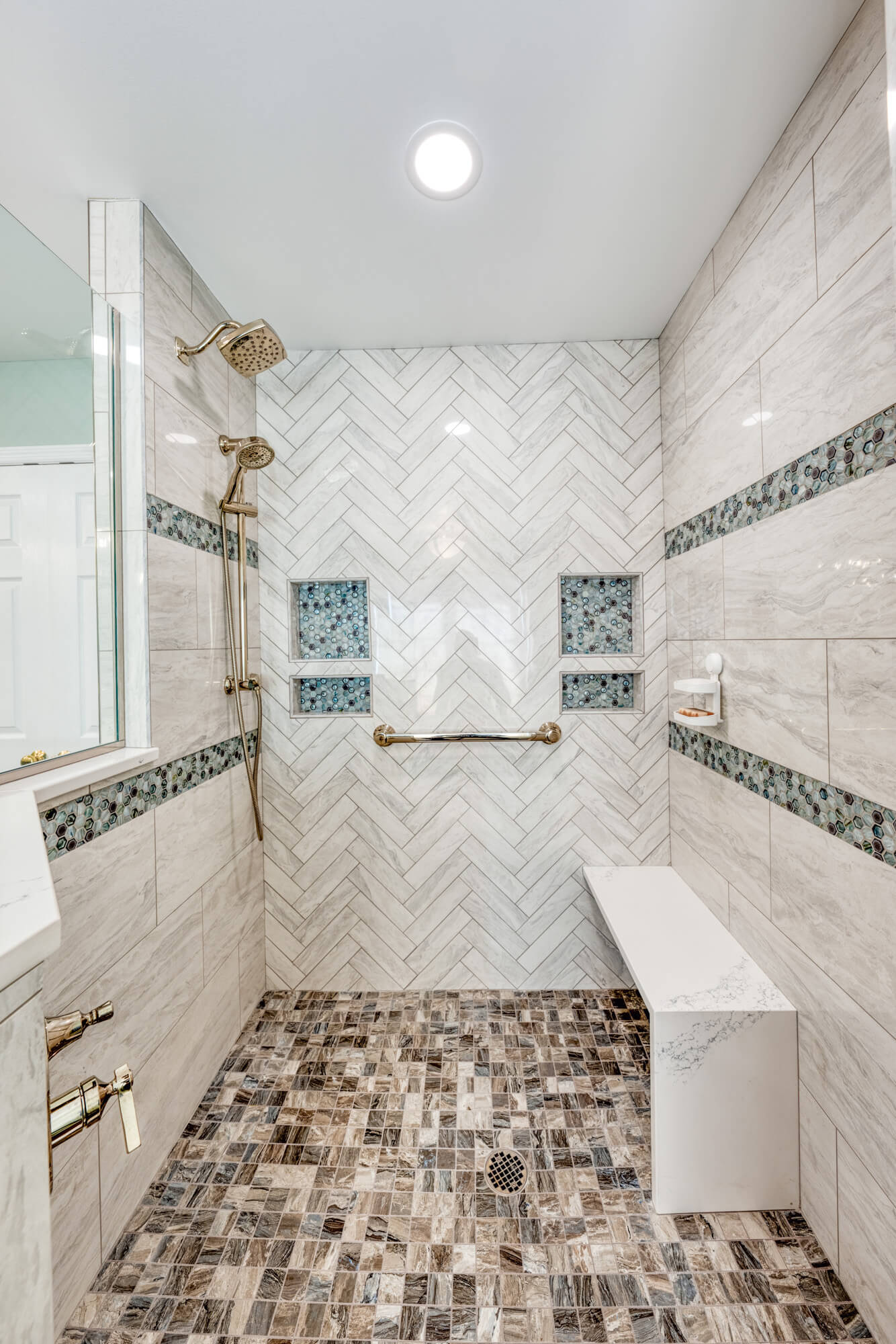
If you love your location, neighborhood, and lot, remodeling often makes sense. Updating key spaces like bathrooms and kitchens can dramatically improve daily comfort and functionality without the cost and disruption of moving.
We explore this further in our article on Remodeling Cost Benefit & Return, which discusses how thoughtful improvements can enhance both quality of life and long-term value.
In many cases, the investment required to move — including realtor fees, closing costs, moving expenses, and potentially higher interest rates — can exceed the cost of improving the home you already enjoy. Remodeling allows you to customize your space intentionally rather than compromising on layout or features in another property.
Cost clarity begins with process clarity. A structured design-build approach helps define scope, selections, and budget before construction begins.
At Excel Remodeling, our streamline process includes an initial consultation, preliminary design, design completion, pre-construction planning, construction, and post-construction follow-up. Careful planning before demolition reduces surprises and ensures materials are ordered, timelines are coordinated, and expectations are aligned.
Bathrooms are among the most frequently used spaces in any home. When designed thoughtfully and built with attention to detail, they improve daily routines, enhance comfort, and support long-term living.
In Central Pennsylvania’s mix of historic and newer homes, professional planning is especially important. Older homes may require updated plumbing, ventilation improvements, or structural considerations, all of which influence cost but protect your home for years to come.
Like kitchens, bathroom remodels vary in cost because every homeowner’s goals are different. The key is understanding what drives investment and aligning your project with how you truly live.
If you're planning a bathroom remodel in Central PA, the best first step is a thoughtful conversation about priorities, scope, and long-term goals.

Whether you're updating a hall bath, transforming a primary suite, or evaluating broader home improvements, understanding cost drivers allows you to make confident decisions. We invite you to explore our portfolio of completed bathroom remodeling projects to see how different layouts, materials, and design priorities influence the final result. Viewing real projects can help you identify what matters most in your own space — whether that’s improved storage, expanded shower space, aging-in-place features, or refined finishes.
Schedule a consultation to explore what’s possible and create a bathroom designed to serve you well for years to come.
Bathroom remodel costs vary depending on size, materials, and layout changes. Projects that maintain the original plumbing layout are typically less complex than those involving structural or plumbing relocation. Custom features, tile complexity, and fixture quality significantly influence overall cost.
Primary bathrooms often include larger showers, double vanities, custom cabinetry, and upgraded finishes. These additional features increase material, labor, and design complexity compared to smaller hall baths.
The biggest cost drivers typically include:
Yes. Proper waterproofing protects your home from moisture damage, mold issues, and long-term structural problems. While it’s not visible after installation, it is one of the most critical components of a durable bathroom remodel.
A well-designed bathroom can improve buyer appeal and functionality. However, the decision depends on your timeline and goals. If the bathroom significantly limits daily comfort or functionality, remodeling may provide both lifestyle and resale benefits.